
THE BATTLE OF MOHOLOHOLO
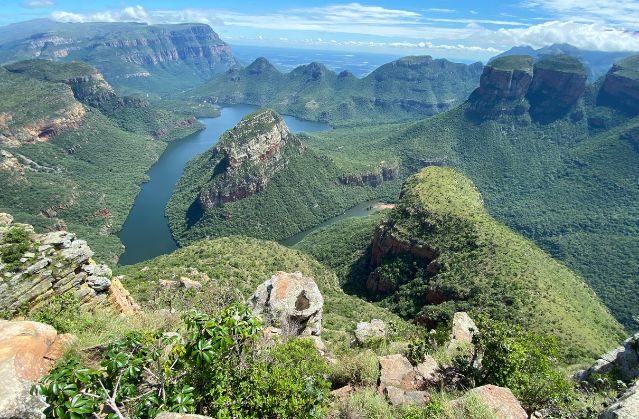
The Blyde Canyon stands as a captivating natural wonder, renowned for being the largest verdant canyon globally and hosting a captivating variety of wildlife.
Presently, this region has become a favored spot among international travelers who have embarked on a long journey to our shores. It serves as a popular stopover for those en route to the Kruger Park.
However, well before this area gained recognition, an epic clash unfolded between two formidable adversaries: Chief Maripe Mashile, leading the Mapulana tribe, and King Mswati II, commanding the Swazi soldiers.
HOW IT HAPPENDED
During a tumultuous period known as the "Mfecane," which translates to "crushing or scattering," the Mapulana people had established their settlement in the vicinity of the Blyde Canyon. This era was marked by conflicts among the indigenous tribal groups of Southern Africa, leading to the displacement of numerous communities in the region.
In 1845, King Mswati II ascended to the throne, succeeding his father, and commenced a series of raids that instilled fear in the hearts of people both nearby and afar.
In 1864, a band of Swazi raiders launched an assault on the Mapulana residing beside the Blyde River. Forced to retreat, the Mapulana sought refuge atop a nearby mountain and began gathering substantial rocks at its summit, preparing for the impending attack.
Recognizing the peril of assaulting the mountain without cover, the Swazi raiders withdrew to a close vicinity, patiently awaiting the mist to shroud the peak. They intended to employ the mist as a shield while launching a surprise attack on the unsuspecting Mapulanas positioned on the summit.
Their wait didn't last long. One fateful night, a layer of mist engulfed the mountain, prompting the Swazi soldiers to ascend from the southern side. However, the Mapulana were well-prepared and vigilant. As soon as the first Swazi soldier was spotted, they unleashed the amassed collection of boulders, sending them hurtling down the path. The unsuspecting Swazi soldiers suffered significant casualties as a consequence.
Legend has it that the remains of those fallen Swazi soldiers can still be glimpsed within the inaccessible rock crevices of the mountain.
AFTERMATH
The mountain where the epic battle unfolded was named Mariepskop, in honor of Chief Maripe Mashile, the skilled leader who guided his Mapulana people to victory that day.
The site where the Swazi party camped while awaiting their attack was situated alongside the Blyde River, adjacent to a prominent buttress. Over time, this location came to be known as Swatini, meaning 'place of the Swazis'. Today, a holiday resort occupies this spot, albeit mistakenly called Swadini.
The river where the Swazis suffered their defeat was originally named 'Motlasedi', signifying 'where the battle occurred'. However, it is now commonly referred to as Klaserie, a distorted version of the word Motlasedi in Afrikaans.
The battle acquired the name Moholoholo, denoting 'the great battle'.
The surviving Swazi warriors harbored apprehension about returning to their king, fearing retribution for their failed mission. Instead, they opted to settle in other parts of the region, where their descendants can still be found today.
Around the same period, small groups of Voortrekkers were traversing the area, seeking a passage down the formidable escarpment to reach the port of Laurenco Marques, known as Mozambique today. This eventually led to the establishment of the towns of Ohrigstad and Lydenberg in close proximity.


0 Comments