
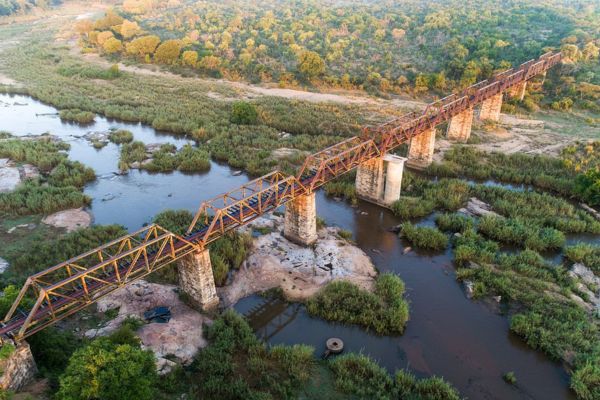
Stand on the riverbank at Skukuza and look downstream. A steel railway bridge strides across the Sabie River, with a train parked on top that will never move again. It took a bribery scandal, a war, a flood and seventeen years to finish that bridge. When it was done, it brought Kruger its first tourists.
Gold and a concession
In 1886 gold was found in the Murchison Range, in the valley of the Selati River. Fortune seekers poured in, and the goldfields needed a railway. The Eastern Line to Delagoa Bay was already being built, so the plan was a branch line running north from Komatipoort, through the bushveld, to the Selati fields. The railway took its name from the river, which is said to be named after Shalati, a female chief of the Tebula people.
On 6 June 1891 the Volksraad granted the concession to one of its own members, a man named Vorster, and a Frenchman, Eugène Oppenheim. Vorster, it turned out, had already sold his share to Oppenheim for £40,000.
The scandal
The plans were approved in May 1893 and construction started from Komatipoort. By July some 40 km of track had been laid, and the line pushed north through what is now southern Kruger, across the Sabie River and on to Newington, roughly 120 km from Komatipoort.
Then the questions started. Investigations uncovered bribery and corruption around the concession, and in 1894 the government halted all work. The company’s finances collapsed, its creditors were left out of pocket, and the line stopped at Newington, with only a temporary wooden bridge carrying it over the Sabie.
For the next fifteen years, the Selati was a railway to nowhere.
A line to nowhere
The Anglo-Boer War gave the abandoned track a brief second life. Baron Ludwig von Steinaecker used it to bring supplies up from Komatipoort for his irregular unit, Steinaecker’s Horse. In 1901 a major flood washed the wooden bridge away.
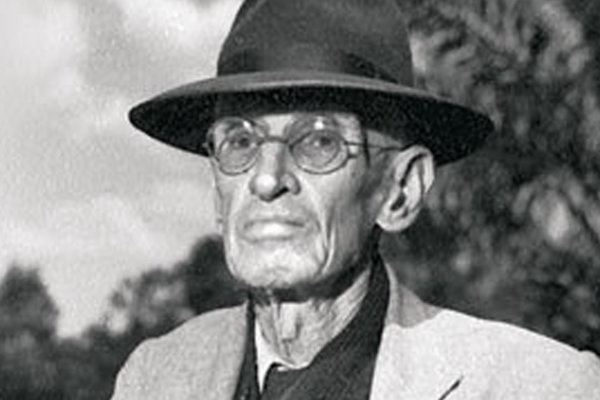
When James Stevenson-Hamilton arrived as the reserve’s first warden in July 1902, the rails were still broken where the wooden bridge had stood. He set up his headquarters in an old blockhouse beside them, at the spot that would later be called Skukuza. His story is Part 2 of this series.
Finishing the job
Work on a proper bridge across the Sabie finally began in 1909, and it opened to trains in 1910. On 25 October 1912 the Selati line was officially opened, and by 1915 it had been extended to Soekmekaar.
North of the park, the line ran on past Klaserie and Hoedspruit towards Tzaneen.
Round in Nine: Kruger’s first tourists
By the 1920s the railways needed passengers. In 1923 South African Railways launched the Round in Nine, a fortnightly winter tour that took nine days to loop from Johannesburg through the Lowveld and Mozambique and back again.
The highlight was the night at Sabie Bridge. The train pulled up beside the river, passengers ate dinner around a campfire with the bush all around them, and at dawn the train rolled on north. Few of them had ever seen anything like it.
Those passengers mattered. The tours showed visitors what the reserve could become and helped build support for protecting it. In 1926 the National Parks Act turned it into Kruger National Park.
A railway built to carry gold ended up carrying tourists.
The last train
Steam trains ran through the park for another half-century. But as traffic grew, so did the problems of running a railway through a national park. In 1971 a new line was commissioned along the park’s western border, and in 1973 traffic on the old Selati route through Kruger stopped for good. The rails were pulled up.
A Class 24 steam locomotive still stands at Skukuza. From 1978 it served, with its carriages, as the Selati Train Restaurant, and it survived a fire in 1995.
Kruger Park Day Tour
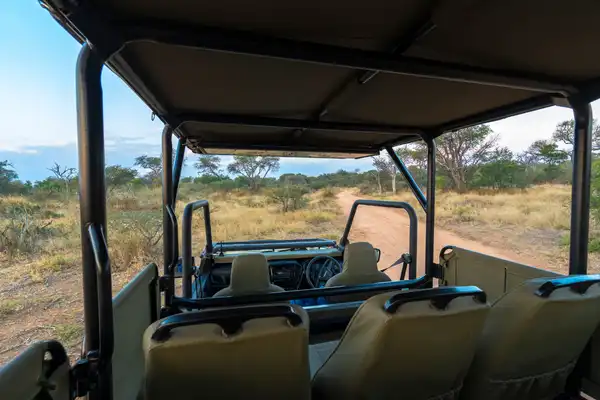
Spend a day in the park the Selati line helped create, in an open safari vehicle with a local guide and collection from Hoedspruit and nearby lodges. Questions? Ask us.
Where to see it today
- The Selati bridge. The bridge is visible from much of Skukuza camp, and it is at its best in the late afternoon.
- Kruger Shalati. Since 2020, a train of converted carriages has stood on the bridge as a hotel, with rooms hanging above the Sabie River.
- Kruger Station. The old Skukuza platform is now a restaurant and bar, with the Class 24 locomotive alongside.
Common questions
What was the Selati Railway?
A branch line from Komatipoort, begun in 1893 to reach the goldfields of the Selati River valley. A bribery scandal stopped work in 1894 at the Sabie River, and the line was only officially opened in 1912.
Do trains still run through Kruger?
No. A new line along the park’s western border was commissioned in 1971, and the route through the park closed in 1973. The bridge at Skukuza and a parked steam train are what remain.
Can you stay on the Selati bridge?
Yes. Kruger Shalati, a hotel in converted train carriages, has stood on the bridge at Skukuza since 2020.
What was the Round in Nine?
A nine-day South African Railways winter tour that began in 1923. Its overnight stop at Sabie Bridge brought some of the first tourists into what became Kruger National Park.
See it for yourself
Most of the Selati story is still there to see. Spend a day in Kruger with one of our guides, or get in touch and we’ll help you plan a trip that takes in the history as well as the wildlife. Browse our day tours.
Previously in the series: James Stevenson-Hamilton: the warden who turned Kruger upside down.
Kruger Park Day Tour
Full day with a local guide, collection from your lodge.



0 Comments