Harry Wolhuter: The Kruger Ranger Who Killed a Lion With a Pocket Knife

Harry Wolhuter: The Kruger Ranger Who Killed a Lion With a Pocket Knife

It’s August 1903. The Sabi Game Reserve — which would later become Kruger National Park — is still wild in every sense of the word. There are no rest camps, no tarred roads, no tourist vehicles. There are a handful of rangers on horseback, a vast and untamed bush, and very little standing between a man and whatever the night might bring.

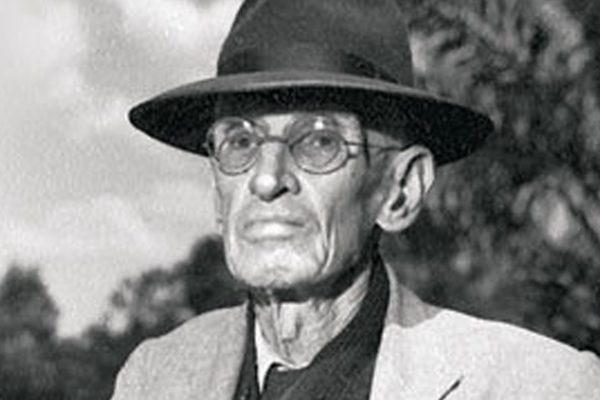
Harry Wolhuter was one of those rangers. And on the evening of 26 August, the bush came for him.

A routine patrol gone wrong:

Wolhuter had been out on patrol near the Olifants River — routine work for a man who had spent his life in the lowveld. He was travelling with a small team: a handful of African game guards, a string of donkeys loaded with camping gear, and a faithful dog named Bull.

When they reached their intended waterhole for the night, they found it dry. It was already late in the afternoon, the shadows stretching long across the mopane. The next water was roughly twelve miles further south. There was nothing for it but to push on.

The team was moving slowly, the donkeys setting the pace. Wolhuter, impatient to reach camp before dark, made the decision that would nearly cost him his life: he rode ahead alone, with only Bull for company.

This is something any guide in the lowveld will tell you. Dusk is not the time to be moving through the bush. The light fades fast here. Predators are active. The world shifts into something older and less forgiving.

Wolhuter knew this. He pushed on anyway.

Two lions in the dark:

Darkness came quickly, as it does in this part of the world. Wolhuter was navigating by starlight, following a rough track south. Bull started to act up — barking at something in the grass alongside the trail. Wolhuter peered into the shadows and made out a dark shape. He assumed reedbuck, common enough in the area, and thought nothing more of it.

Then the shape charged.

It wasn’t a reedbuck. It was a lion. Wolhuter yanked his horse sharply to the left, but the lion was already in the air. It caught the horse’s hindquarters in its claws. The horse bolted in blind panic — and Wolhuter was thrown.

He hit the ground hard.

As he was gathering himself, still dazed from the fall, he looked up to see the first lion had abandoned the horse and was now coming back for him. Before he could do anything, it had him — jaws clamped around his right shoulder, dragging him backwards through the bush.

There was a second lion. It had circled in behind him.

The knife:

What happened next is the part of this story that has been told around campfires for over a hundred years.

Being dragged through the dark by a lion, shoulder in its mouth, a second predator closing in — most men would have had nothing left. Wolhuter somehow had enough. Hanging from the lion’s jaws, he reached down with his free hand and found the sheath knife on his belt.

He stabbed the lion. Twice in the body, then once in the throat — severing the jugular. The lion released him and staggered back. For a breathless moment, the two of them stared at each other. Then the lion collapsed.

Wolhuter, bleeding heavily and barely able to move, dragged himself to a nearby tree and hauled himself up into the branches just as the second lion arrived on the scene.

Bull saved him. The dog had been barking furiously throughout, and now harassed the second lion relentlessly, keeping it distracted long enough for Wolhuter’s men — who had heard the chaos — to arrive with torches and rifles.

They found their ranger in the tree, alive, barely.

Four days to Komatipoort:

 
Wolhuter spent a day recovering in the bush before he could be moved. His men fashioned a stretcher — a rough litter — and carried him out on foot, a journey that took four days before they reached Komatipoort and any kind of medical attention.

He survived. He recovered. And he went back to work in the bush.

The knife & the lion skin:

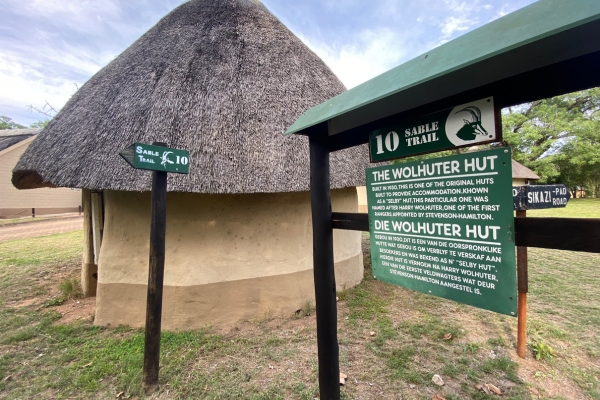
The knife Wolhuter used that night, along with the skin of the lion, are still on display today at the Stevenson-Hamilton Memorial Library at Skukuza Rest Camp. If you find yourself inside Kruger, it’s worth stopping to look at them — a small knife and a faded skin that speak to something extraordinary about the early days of this park and the people who kept it alive.

What this story says about Kruger:

We tell this story not just because it’s gripping — and it is — but because it captures something true about Kruger that gets lost in the tourist brochures.

This park was built by people who lived in the bush, not just visited it. Men like Wolhuter gave their careers, and nearly their lives, to protecting what we now take for granted when we drive through those gates. The lions he encountered that night weren’t villains. They were doing exactly what lions do. And Wolhuter, to his credit, understood that.

He didn’t come back angry. He came back with a deeper respect for the place.

That’s the thing about Kruger. The more time you spend in it, the more it asks of you — in terms of patience, attention, and humility. You are not the most important thing in that landscape. That’s not a threat. It’s the point.

Come and see it for yourself:

We’ve been running day tours and transfers in and around Kruger since 2009. We’re based in Hoedspruit, right at the edge of Greater Kruger, and there isn’t much about this park we haven’t seen.

If you’re planning a visit and you’d like to experience Kruger with someone who knows it properly — not just the roads, but the history, the stories, the rhythms of the bush — we’d love to take you.

Find out more about our Kruger Park Day Tour →


Eastgate Airport Hoedspruit (HDS) — Everything You Need to Know

Eastgate Airport Hoedspruit (HDS) — Everything You Need to Know

If you're planning a safari in the Greater Kruger area, how you arrive matters more than most people realise. Flying into Eastgate Airport (IATA: HDS) rather than routing through Johannesburg or Nelspruit can save you hours of road travel and get you into the bush faster — which is exactly where you want to be.
Here's everything you need to know about flying into Hoedspruit.

Where is Eastgate Airport?

Eastgate Airport is located just outside Hoedspruit in Limpopo province, roughly 8 kilometres from the town centre. It sits in the heart of the Greater Kruger ecosystem, surrounded by private game reserves on almost every side. On a clear day you can spot giraffe browsing in the bush from the terminal parking lot — which tells you something about where you've landed.

The airport services Hoedspruit, the surrounding private reserves of the Timbavati, Klaserie, Thornybush and Balule, and provides the closest air access to the southern and central areas of Kruger National Park.

Which Airlines Fly to Hoedspruit?

Eastgate is currently serviced by three airlines: Airlink, CemAir, and FlySafair.
Destinations include Johannesburg (OR Tambo) and Cape Town, with FlySafair currently operating on the Cape Town route. CemAir has also recently added a route to George, which is great news for visitors coming from the Garden Route.

It's worth booking early, particularly for peak safari season (June to October) when seats fill up fast. There is also ongoing discussion around Eastgate potentially developing into a regional hub with intra-African connections — something that would be a significant step forward for the Hoedspruit area and the broader Greater Kruger tourism economy. Watch this space.

What is the Airport Like?

Eastgate Airport sits on the Hoedspruit Air Force Base — one of those only-in-South-Africa details that catches first-time visitors off guard. The military base and civilian airport share the same runway, and the occasional air force activity adds an unexpected backdrop to your arrival. It all adds to the character of the place.
The terminal itself is small, unfussy and genuinely pleasant. Check-in, security and baggage claim take about fifteen minutes combined on a normal day. There's no long corridor walk, no crowded terminal, no losing yourself in a shopping mall disguised as an airport.

What there is: a small café, a curio shop, clean facilities, and staff who are used to dealing with international visitors arriving for their first African safari. The energy is calm and the whole experience sets the right tone for what's coming.

Getting from Eastgate Airport into Hoedspruit

One thing to plan ahead for: there is no Uber service and no dedicated taxi rank at Eastgate Airport. This catches people out. You need to arrange your transfer or car hire in advance — don't arrive expecting to grab a ride on the spot.

Most lodges and guesthouses in the area offer airport transfers, so confirm this when you book your accommodation. The drive from the airport into Hoedspruit town is short — under ten minutes — while transfers to the private reserves typically range from 20 minutes to just over an hour depending on which reserve you're headed to.

Car hire is available at the airport if you prefer the flexibility of your own vehicle.
At Buya Buya Travel we can arrange airport transfers and help you plan the logistics of your arrival — whether you're heading straight out on a game drive or settling in before the adventure begins. Just get in touch before you fly.

Flying Out — What to Know

Eastgate has a single terminal handling both arrivals and departures, so check-in desks and departure gates are all in the same building. Arrive at least 45 minutes before your flight. Security is efficient but the airport does get busy during peak season morning departures, particularly when multiple flights are scheduled close together.

There is no international departures facility at Eastgate — all international connections route through Johannesburg or Cape Town.

Eastgate vs KMIA — Which Airport Should You Use?

It's worth knowing that Eastgate (HDS) is not the only airport serving the Kruger region. Kruger Mpumalanga International Airport (KMIA) is located further south, near Nelspruit, and handles international flights as well as domestic routes.
The two airports serve different parts of the region. KMIA is better positioned for the southern Kruger gates and the Mpumalanga escarpment, while Eastgate is the right choice if you're headed to Hoedspruit, the central Kruger, or the private reserves of the Greater Kruger — Timbavati, Klaserie, Thornybush and Balule among them. Booking the wrong airport can add two or more hours of unnecessary driving, so it's worth getting right before you book your flights.

Is it Worth Flying into Hoedspruit Rather Than Driving?

If you're coming from overseas and transiting through Johannesburg, the answer is almost always yes. The drive from OR Tambo to Hoedspruit is approximately five to six hours depending on traffic — that's most of a day gone before you've seen a single animal. The one-hour flight is straightforward, and you arrive rested and ready.
For South African visitors driving from Gauteng, the road trip through the escarpment is genuinely beautiful and worth doing at least once. But if time is short, flying in is the smarter move.

Plan Your Arrival with Buya Buya

Hoedspruit is a small town but it punches well above its weight as a safari base. From here you have direct access to Kruger National Park, the private reserves of the Greater Kruger, the Panorama Route, and a handful of community and wildlife experiences that most visitors never find on their own.

If you're flying into Eastgate and want help planning what comes next — transfers, day trips, guided safaris or a full itinerary — get in touch with us at Buya Buya Travel. We've been doing this since 2009 and we know this corner of the Lowveld better than anyone.

Panorama Route Guide from Hoedspruit

Panorama Route Guide from Hoedspruit

Less than an hour and a half north-east of Hoedspruit the Drakensberg escarpment steps off the Highveld and plunges into the Lowveld plains. Here a 160 km scenic loop—nicknamed the Panorama Route—threads past yawning gorges, rainforest-rimmed cliffs and a string of 19th-century gold-rush villages.

The journey is short enough to conquer in a day yet layered enough to reward a slow, two-day wander. Guides, storytellers and amateur photographers have argued for decades about which outlook is “the one you simply can’t miss”; by the time you finish this drive you will understand why choosing is impossible

Why this landscape feels different:

Twenty-five million years of erosion by the Blyde and Treur rivers gnawed away at the quartzite wall of the Highveld plateau, carving what is now hailed as the world’s third-largest “green canyon.” Rock strata more than 2 billion years old reveal oranges and deep purples at sunrise, then flush emerald when summer rainclouds drag their shadows across the slopes.

People have left lighter footprints: San rock art hides in nearby shelters; Sepedi place-names cling to the peaks; and the clapperboard façades of Pilgrim’s Rest recall the 1873 gold strike that lured prospectors here on ox wagons..


A storyteller’s journey—north to south:

Panorama Route Tour

Three Rondawel View Point
The most natural way to tackle the loop from Hoedspruit is to enter at the Three Rondavels lookout, about 90 km (1 hr 20 min) from town. Three hut-shaped buttresses — named Magabolle, Mogoladikwe, and Maseroto after a local chief’s wives — stand sentinel above the Blyde River Canyon. On a clear winter morning, you can see nearly 100 km across the plains.

The Panorama Route

Bourke’s Luck Potholes
Further south, centuries of whirlpool action have drilled perfect cylinders into sandstone, creating a surreal amphitheatre of rock and water.
Timber footbridges sway slightly underfoot as you peer down into jade-green pools.

Barlin Falls on the Panorama Route

Berlin Falls
Just a few kilometres south of Bourke’s Luck Potholes, Berlin Falls offers a striking spectacle. Water funnels through a narrow chute before fanning out into a wide curtain that plunges into a deep turquoise pool. The bowl-shaped amphitheatre often throws rainbows across the spray by mid-morning, making this one of the most photogenic stops along the Panorama Route.

Lisbon Falls on the Panorama Route

Lisbon Falls
Continuing down the R532, Lisbon Falls tumbles 94 metres in twin ribbons, earning its title as Mpumalanga’s tallest single-drop waterfall. Framed by lush, fern-covered cliffs, it’s especially powerful after summer rains. A short walk from the parking area brings you to excellent viewing points, making it a favourite stop for both photographers and picnickers.

Pinnacle Panorama Route

God's Window
A gentle boardwalk leads through mist-belt rainforest to one of South Africa’s most famous views. From 1 730 m above sea level, you can trace the Kruger National Park boundary all the way to Mozambique on a clear day.

The Pinnacle
Just north of God’s Window, The Pinnacle is a dramatic quartzite tower that rises 30 metres above the surrounding forest. Cloaked in ferns and framed by a narrow gorge, it looks like a natural skyscraper standing guard over the canyon. A short walk from the parking area brings you to viewing platforms where you can admire both the rock formation and the lush valley below — a stop that feels both surreal and cinematic.

What a Day with Buya Buya Travel Looks Like

A Panorama Route tour with Buya Buya Travel isn’t just about ticking off the sights — it’s about travelling in comfort, hearing the stories behind the landscapes, and never worrying about the details.

We’ll collect you from your lodge in Hoedspruit at first light, with a friendly greeting from your driver-guide and a comfortable vehicle ready for the day’s adventure. As the escarpment comes into view, you’ll already be hearing folklore, history, and hidden gems not found in guidebooks.

Our guides know the best times to reach each lookout to avoid the crowds, and they handle the entry fees, parking, and winding mountain roads — leaving you free to enjoy the views and capture the moments. Lunch is often a highlight too, whether it’s Graskop’s legendary pancakes or a relaxed café tucked away in the forest.

By the time we wind back into Hoedspruit in the late afternoon, you’ll have not just a gallery of photos, but the feeling that you’ve lived the Panorama Route — enriched by stories, relaxed by comfort, and stress-free from start to finish.

Ready to plan your own horizon-chasing day?

Whether you tackle the Panorama Route at warp-speed in a single, goose-bump-filled day or idle away two dreamy days among waterfalls and wild stories, the loop remains one of South Africa’s great road-trip experiences. Hoedspruit is the natural launch pad, and Buya Buya Travel’s team is on hand to turn the logistics into the smooth background hum that every good journey deserves.

Pack your wide-angle lens, lace up those trail shoes and come find out why locals still call this the place “where the earth drops away and the sky begins.”. Check out our Panorama Route Tour page for more information.

What is the Big 5?

What is the Big 5?

Most people arrive in Kruger having heard the term a hundred times. Few know where it actually comes from.

The Big 5 — lion, leopard, elephant, rhino and buffalo — weren't named for being the largest, or the rarest, or even the most beautiful. They were named by big game hunters in the colonial era for being the most dangerous animals to pursue on foot. These were the five that could kill you before you killed them. The ones that made experienced hunters nervous.

That context changes how you look at them.

Mighty African Elephant:

The animal that surprises people most. Not because of its size — you expect that — but because of its intelligence. Watch a breeding herd long enough and you start to see the social dynamics, the communication, the way the matriarch makes decisions. It's uncomfortable in the best way, that recognition.

Kruger holds one of Africa's largest elephant populations. You will see them. What stays with you is how much is happening beneath the surface.

The Regal Lion:

There's nothing quite like finding a pride at first light. The sound reaches you before the sight — a low rumble, the occasional huff, the stillness of the bush around them. Lions are deceptively relaxed most of the time, which makes every sighting feel like a privilege rather than something earned.

The Kruger population sits at around 1,600 individuals. You have a good chance of seeing them on any given day, but a sighting that stays with you — a pride on a kill, cubs at play, a male calling at dusk — that takes a little patience and a lot of luck. When it happens, you'll know why people come back for more.

The Elusive Leopard:

The enigmatic and elusive leopard is undoubtedly one of the most coveted sightings for wildlife enthusiasts. Renowned for their stealth and solitary nature, leopards are masters of camouflage, blending seamlessly into their surroundings.

Kruger Park provides a habitat conducive to leopard sightings, as the park boasts a healthy leopard population. Spotting one of these elusive creatures lounging on a tree branch or stealthily moving through the dense vegetation is a truly rare and magical moment.


The Mighty Rhino:

Both black and white rhino occur in Kruger, though sightings have become harder as numbers decline. White rhino are generally more visible, often grazing in open areas in the early morning.

I'm not going to dress up what's happening to them. Poaching pressure in the Greater Kruger remains severe. Every rhino sighting now carries a weight it didn't used to carry. See them while you can, and support the people fighting to keep them here.

The Majestic Cape Buffalo:

Underestimated by almost everyone. Buffalo are responsible for more hunting fatalities than any other member of the Big 5, and a dagga boy — an old solitary bull pushed out of the herd — is one of the most unpredictable animals on the continent.

In large herds they're extraordinary to watch. Thousands of animals moving together, the dust rising, the sound of hooves on dry ground. It's one of those sights that makes you feel very small, which is exactly how you should feel in Kruger.

Conclusion:

See the Big 5 with someone who knows where to look

Our Kruger day tours run from Hoedspruit into the Central Kruger — one of the most productive game viewing areas in the park. We handle the gates, the driving and the stories. You handle the camera.

[Book a Kruger Day Tour →]

When is the best time to go on Safari?

When is the best time to go on Safari?

Everyone asks this question. And the honest answer is that it depends entirely on what you're looking for — because Kruger in July and Kruger in January are almost two different parks.

I've been running tours in and out of the Southern Kruger since 2009. Here's what I actually think.

If you want the easiest game viewing — come in late winter

June, July and August are when most people visit, and for good reason. The bush strips back. Waterholes become the only show in town. Animals congregate, and without the thick summer foliage hiding everything, you can actually see them.

Game viewing is at its most productive. Lion, elephant, buffalo — you'll find them without working too hard. The days are clear and cool, the nights cold. It's the classic safari experience, and it delivers.

Late winter — August into September — is also worth considering if you're sensitive to malaria risk. The mosquito pressure drops significantly once the rains are gone and the bush has dried out. Combined with excellent game viewing, it's a strong choice for first-timers who want the odds stacked in their favour.

The trade-off is the landscape. The bush in winter is dry and sparse — beautiful in its own stark way, but it won't match the postcard-green images people sometimes expect.

If you want something different — come in summer

This is actually my personal preference, and I'll tell you why.

The days stretch long. Light until nearly eight in the evening, which means more hours in the park, more hours on the road, more chances for something to happen. The afternoon storms roll in fast and dramatic — lightning over the plains, the smell of rain on hot earth — and after they pass the light turns golden in a way that winter simply can't match.

The bush is thick and green and alive. Impala lambs everywhere. Birds that disappear for half the year come flooding back — bee-eaters, rollers, cuckoos, storks. If you have any interest in birding at all, summer is the season.

Yes, the game viewing is harder. Animals are spread out, water is everywhere, and the grass is tall. You have to work for your sightings. But when you find a leopard in a fever tree with a green canopy behind it, or a breeding herd of elephant against a stormy sky — those are the images that stay with you.

The rain is rarely all-day. Most afternoons, an hour of drama, and then it's done.

The honest version

First time in Kruger, want reliable sightings, not keen on heat or malaria risk → late winter, August into September.

You've been before, you love birds, you want atmosphere and long golden evenings → summer, November through January.

Either way, Kruger won't disappoint. It never does.

Ready To Go?

We run Kruger day tours from Hoedspruit year-round, and we'll tell you honestly what to expect in whatever month you're planning. No hard sell — just a good day in the bush.

[Book a Kruger Day Tour →]

Historical Sites Of The Kruger National Park

Historical Sites Of The Kruger National Park

Most people come to Kruger for the wildlife. They leave having seen elephant, lion, maybe a leopard if they're lucky, and they go home happy. But there's another layer to this landscape that most visitors never find — one that stretches back not just decades but millennia.Kruger National Park is not just a wildlife reserve. It's an archive. The roads, the rivers, the rocky outcrops — all of them carry stories. Here are some of the historical sites worth seeking out on your next visit.

Albasini Ruins

João Albasini was a Portuguese trader and adventurer who arrived in this part of the Lowveld in the mid-1800s, long before there was any thought of a national park. He established a trading post here, built relationships with local Tsonga chiefs, and became one of the most influential figures in the region during that era.

What remains today are the stone foundations and walls of his dwelling — weathered, partially reclaimed by the bush, and quietly remarkable for their age. Walking around the ruins you get a real sense of how remote and ambitious this outpost must have been. Interpretive boards on site give context, but honestly the ruins speak for themselves.
It's one of those stops that rewards the curious traveller who goes looking for it.

Masorini Archaeological Site

Near the Phalaborwa Gate, Masorini takes you back considerably further — to an Iron Age settlement that flourished here around a thousand years ago. The Ba-Phalaborwa people who lived here were skilled iron smelters, and the site preserves both a reconstructed village and evidence of the furnaces they used.

The stone-walled huts, fire pits and grinding stones give you a tangible connection to daily life in this landscape long before any European set foot here. There's an interpretive centre on site displaying pottery, tools and smelting artefacts recovered during excavations.If you're coming in through Phalaborwa Gate it's worth building extra time into your day to stop here properly.

Crooks Corner

At the very northern tip of Kruger, where South Africa, Zimbabwe and Mozambique meet at the confluence of the Limpopo and Luvuvhu Rivers, sits one of the most storied spots in the park.

Crooks Corner earned its name honestly. In the early 20th century the convergence of three international boundaries made it an ideal refuge for anyone wanting to disappear — poachers, ivory smugglers, fugitives from colonial law. Step across a river and you were in a different jurisdiction entirely. The most famous of the characters associated with the area was Cecil Barnard, known as "Bvekenya" or "Mr Big Nose," who ran an ivory smuggling operation here for years and became something of a legend in the process.

It's a remote destination, accessible via the Pafuri area in the far north, but the drive through that landscape is extraordinary in its own right. The fever tree forests along the Luvuvhu River are unlike anything else in the park.

Harry Wolhuter Attack Site

In 1904, a game ranger named Harry Wolhuter was thrown from his horse by a lion on patrol in what was then the Sabi Game Reserve. What happened next became one of the most remarkable survival stories in the history of African conservation.

Pinned to the ground and mauled, Wolhuter managed to reach his hunting knife and kill the lion with his bare hands. He survived. The lion did not.
The site where this happened is marked within the park, and Wolhuter's knife — along with the lion's skull — is on display at the Stevenson-Hamilton Memorial Library at Skukuza. It's a sobering reminder of what the early rangers were up against, patrolling on horseback through wilderness that was genuinely dangerous and largely unmapped.

Jock Of The Bushveld Birthplace

Sir Percy FitzPatrick's book Jock of the Bushveld is one of South Africa's most beloved stories — the account of a transport rider and his Staffordshire Bull Terrier travelling the old wagon routes through the Lowveld in the 1880s. For generations of South African children, Jock is as real as any historical figure.

The birthplace of the dog himself was only confirmed in the 1980s when a senior ranger mapping the old Voortrekker road found the grave of Adolf Soltke — a man FitzPatrick had mentioned as a landmark near the birth site in his book. The location is marked in the southern Kruger and sits along the same road that FitzPatrick and Jock would have travelled all those years ago.

Selati Railway Bridge

At Skukuza rest camp, an old iron railway bridge spans the Sabie River — and it carries more history than most visitors realise.
The Selati line was commissioned in 1893 to connect the interior to the coast, but its construction was plagued by corruption and the company eventually went bankrupt mid-build. The line sat incomplete for fifteen years before being revived.

During the Anglo-Boer War it was used for military supply transport, and for a brief period afterwards a tourist service known as the "Round in Nine" — a nine-day rail journey with an overnight stop in the game reserve — operated along the route. It was eventually discontinued after the locomotives kept starting veld fires in the park.
The bridge at Skukuza is no longer in use for rail traffic, but it remains standing, and a lodge has since been built on it — making it probably the only place in the world where you can have dinner on a historic railway bridge over a river full of hippos.

Voortrekker Road

In the 1830s, groups of Voortrekkers left the Cape Colony heading northeast, driven by a desire to escape British rule and establish their own settlement at Delagoa Bay on the Mozambique coast. The route they cut through what is now the southern Kruger became one of the most significant — and deadly — paths in South African history.
Louis Tregardt led the first group to complete the journey in 1837-38. It nearly destroyed his party. Malaria claimed many lives along the way, and the conditions were brutal. Later, when gold was discovered at Lydenburg in the 1860s, the route became heavily trafficked by transport riders hauling supplies.

The old Voortrekker road still exists in the southern Kruger, largely following its original path. You drive it today on a well-maintained park road, past impala and giraffe and acacia, with very little to indicate that exhausted men and oxen once struggled along the same line through fever country.
That's what makes it worth knowing about.