
In July 1902 a 34-year-old cavalry officer rode into a malaria-ridden corner of the Lowveld with a two-year contract and, so the story goes, one instruction from his boss: go down there and make yourself thoroughly disagreeable to everyone. He stayed 44 years.
A soldier, not a scientist
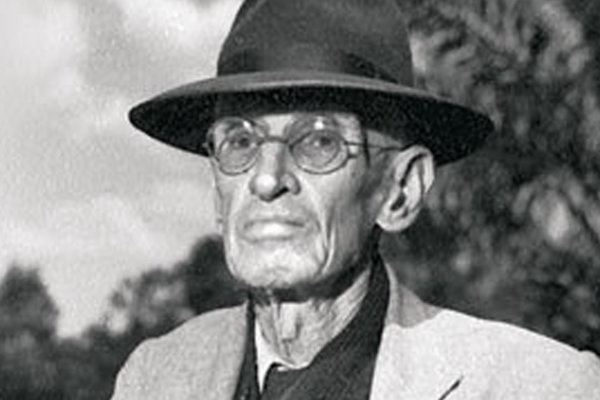
James Stevenson-Hamilton was born in Dublin on 2 October 1867, the eldest of nine children in a Scottish family. He went through Rugby and Sandhurst and was commissioned into the 6th (Inniskilling) Dragoons in 1888. That same year his regiment brought him to Natal, where he saw his first South African game: a family of reedbuck. He never forgot it.
He was no stranger to rough country. In 1898 he joined Major Alfred St Hill Gibbons’ expedition up the Zambezi, abandoning the boats to explore Barotseland on foot. Then came the Anglo-Boer War, which he finished as a major.
President Paul Kruger had proclaimed the Sabi Game Reserve on 26 March 1898, but war had swept over it since and the proclamation was little more than a line on a map. In 1902 Sir Godfrey Lagden offered Stevenson-Hamilton a two-year contract as its warden. Two men had held the post in 1901, but the first was killed in the war within weeks and the second was dismissed months later. Nobody expected much to come of it.
He who sweeps clean
He set up headquarters in an old wartime blockhouse at Sabi Bridge, where the unfinished Selati railway crossed the river. Then he did exactly as he had been told.
Shooting in the reserve was banned. Poachers were caught and prosecuted, and he made no exceptions: one party he took to court was made up of senior policemen. In 1903 he stopped cattle being driven through the reserve and shut down prospecting for coal and minerals. That May the Singwitsi reserve to the north was proclaimed and placed under his control too. The two would one day be joined to form the heart of today’s park.
He also hired the first rangers, black and white, to patrol on horseback and on foot. One of them was Harry Wolhuter, whose night with two lions in 1903 is Part 1 of this series.
Not everything he did sits easily today. Like most conservationists of his time, he saw predators as a problem, and lions and wild dogs were shot to build up the antelope herds. More serious were the evictions: Tsonga families living in the reserve were moved off the land. The name they gave him, Skukuza, is usually translated as “he who sweeps clean” or “he who turns everything upside down”. It was not entirely a compliment, and both meanings are worth remembering when you drive into the camp that carries it.
War, and a long wait
Stevenson-Hamilton knew that a game reserve could be abolished as easily as it had been proclaimed. Farmers wanted the grazing and mining interests wanted the minerals. In 1912 he first raised the idea of a true national park with Jan Smuts.
Then the First World War broke out. In 1914 he went back into uniform and handed the reserves to his rangers. When he returned in 1920 he found the administration in a shambles, and he had to start again.
The tourists who helped save it
Help came from an unexpected place: the railway. From 1923, South African Railways ran a winter tour called the Round in Nine, and its trains stopped overnight at Sabie Bridge. Passengers ate around a campfire beside the river and went home talking about the animals. Among them were members of the Provincial Council, who left with a new idea of what the reserve could become. That story is Part 3 of this series.
On 31 May 1926 the National Parks Act was passed, after Minister Piet Grobler took the bill to parliament. The Sabi and Singwitsi reserves became one park, and naming it after Paul Kruger helped win support for the bill. Kruger National Park opened to the public in 1927. Entry cost £1, and only a handful of cars came that first year.
In 1936 the camp at Sabie Bridge was renamed Skukuza in his honour.
He was given two years to make the reserve work. He gave it 44.
Hilda, and Shirimantanga
Stevenson-Hamilton was 63 when he married Hilda Cholmondeley, an artist 34 years his junior. They had three children, born in 1931, 1933 and 1935.
He wrote as well as he worked. His books include The Low-Veld: Its Wild Life and Its People (1929) and South African Eden (1937), which is still worth tracking down for its first-hand account of the park’s early years.
He retired on 30 April 1946 and settled in White River, where he died on 10 December 1957, aged 90. He had already chosen his resting place: Shirimantanga, a granite koppie a short drive south of Skukuza. After Hilda died, their ashes were scattered together on its boulders in April 1979. Hilda also sculpted the statue of him that stands outside the Stevenson-Hamilton Memorial Library at Skukuza.
Kruger Park Day Tour
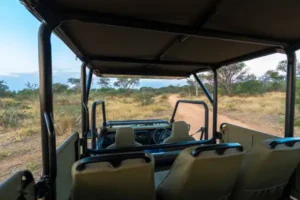
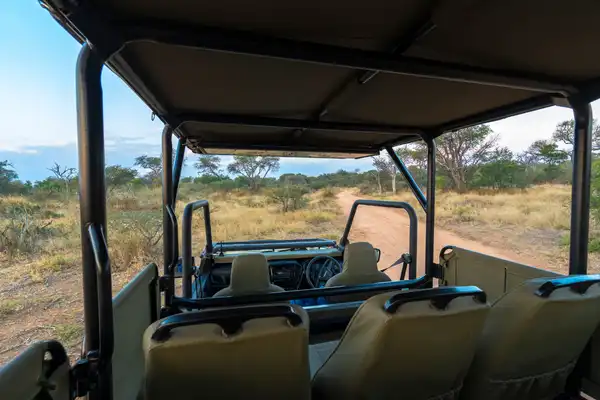
See the park Stevenson-Hamilton spent his life protecting, in an open safari vehicle with a local guide and collection from Hoedspruit and nearby lodges. Questions? Ask us.
Where to find him today
- Skukuza Rest Camp. The camp carries his nickname, and his old headquarters stood here beside the Sabie River.
- The Stevenson-Hamilton Memorial Library. Hilda’s statue of him stands at the entrance. Inside you’ll find Harry Wolhuter’s knife and the skin of the lion he killed.
- Shirimantanga. The koppie south of Skukuza where his and Hilda’s ashes were scattered. It’s a quiet stop, and few visitors know why it matters.
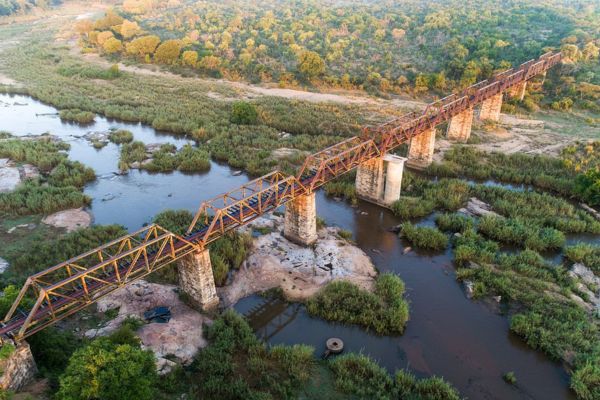
- The Selati bridge. The railway bridge that brought the first tourists still crosses the Sabie at Skukuza.
Common questions
Who was the first warden of Kruger National Park?
James Stevenson-Hamilton. He was appointed warden of the Sabi Game Reserve in 1902, stayed on when it became Kruger National Park in 1926, and retired in 1946.
What does Skukuza mean?
It was the Tsonga nickname for Stevenson-Hamilton, usually translated as “he who sweeps clean” or “he who turns everything upside down”. The main camp was renamed Skukuza in his honour in 1936.
Why is the park named after Paul Kruger?
Paul Kruger proclaimed the original Sabi reserve in 1898. When the national park was created in 1926, naming it after him helped win political support for the bill.
Can you visit Stevenson-Hamilton’s grave?
There is no grave. His ashes, and later his wife Hilda’s, were scattered at Shirimantanga, a granite koppie a short drive south of Skukuza.
See it for yourself
Stevenson-Hamilton’s Kruger is still out there, and it starts at Hoedspruit’s doorstep. Spend a day in the park he built with one of our guides. Browse our day tours, or get in touch and we’ll help you plan it.
Next in the series: The Selati Railway: the scandal that brought Kruger its first tourists.
Kruger Park Day Tour
Full day with a local guide, collection from your lodge.


0 Comments