
It's the question we're asked more than any other, usually in a quiet email a few weeks before someone books. Is Kruger actually safe?
The short answer is yes. Kruger is one of the safest wildlife destinations in Africa. Well over a million people pass through its gates every year, and the vast majority leave with nothing worse than a sunburn and a memory card full of lions.
We live and work on the edge of the Greater Kruger in Hoedspruit, and we've been guiding guests here since 2009. So here's the honest version: what the real risks are, what isn't worth worrying about, and how to keep your trip exactly what it should be.
The Real Risk Is Wild, Not Criminal
Kruger isn't a zoo. The lion lying ten metres from your vehicle is a wild predator, and the elephant crossing the road weighs as much as a small truck. Almost every serious incident in the park's history comes down to one thing: people forgetting that.
The rules are simple, and they exist for good reason:
- Stay inside your vehicle. You can only get out at designated camps, picnic sites and viewpoints. Enforcement is real: one tourist was fined R2,500 in 2026 for stepping out of his car at a lion sighting.
- Keep everything inside. No arms out of windows, no heads through sunroofs. SANParks lists getting out in undesignated areas, speeding and feeding animals as the risky behaviours it sees most often.
- Give elephants space. If a bull is shaking his head, flaring his ears or has dark streaks running down his cheeks, back off slowly and give him the road. He's having a bad day, and you don't want to be part of it.
- Respect the dark. In the unfenced lodges of the Greater Kruger, you'll be escorted to your room after sunset. That isn't theatre. Hippos graze on lodge lawns at night, and leopards walk the same paths you do.
Follow these, and the animals will almost always simply carry on being animals.
The Recent Incident: What Happened
We won't pretend it didn't happen. In May 2026, two tourists were found dead in the Pafuri section in the far north of the park. They were a South African couple who had not returned to their lodge, and police opened murder and kidnapping investigations.
It shook everyone who loves this place. The environment minister described it as the first incident of its kind ever reported in the park's history, and SANParks announced it would strengthen security in the park's more isolated areas.
Our thoughts remain with the family. For travellers weighing up a trip, the context matters: this was a tragic and unprecedented event in a remote corner of a park the size of Wales, in over a century of operation. It isn't a pattern.
Full-Day Kruger Safari from Hoedspruit
Open vehicle, experienced local guide, pickup from your lodge. No gate-time stress. Questions? Ask us.
Health: Malaria and What to Take
Kruger and the whole Lowveld, including Hoedspruit, fall within South Africa's malaria endemic area, and SANParks advises visitors to speak to a travel doctor about prevention before they arrive.
Here's how it plays out locally:
- Risk is highest in the wet summer months (roughly November to April) and much lower in the dry winter. More on the seasons in our guide to the best time to go on safari.
- Common prophylactics available in South Africa include atovaquone-proguanil (sold as Malanil), doxycycline and mefloquine. Your doctor will recommend the right one for you, especially for children or during pregnancy.
- Bite prevention matters as much as tablets. Use long sleeves at dusk, a good repellent like Tabard or Peaceful Sleep, and sleep under a net or fan.
- If you feel flu-like after your trip, get tested. Tell your doctor you've been to a malaria area. Resident doctors are based at Skukuza, Kruger's main camp, and can be consulted before your visit on +27 13 735 5638.
Getting Here: The Road Is Riskier Than the Bush
Honestly? The drive from Johannesburg carries more risk than anything inside the park.
The routes into the Lowveld are long, with potholes, trucks and fatigue. Once you're off the highway, the R40 around Hoedspruit has its own hazards: kudu, warthog and the occasional giraffe stepping out without warning, especially at dawn and dusk.
- Don't drive at night. Plan to arrive before dark.
- Watch the gate times. Park gates open and close on a strict seasonal schedule, and late arrivals are fined.
- Consider flying. Hoedspruit's Eastgate Airport puts you right on the doorstep of the Greater Kruger. Read our Eastgate Airport guide.
- Let someone else drive. A private airport transfer or our Johannesburg to Hoedspruit shuttle means you arrive rested, not frazzled.
Self-Drive or Guided?
Self-driving Kruger is safe and hugely rewarding if you're confident, patient and follow the rules. Thousands of people do it every week. But a guided safari changes the experience in ways that go beyond safety:
- Your guide reads the bush. They know when an elephant is relaxed and when it isn't, and position the vehicle accordingly.
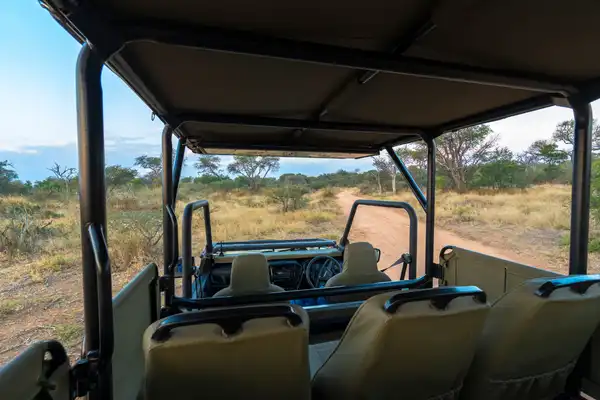
- Open vehicles are safe with a guide. Animals see the vehicle as one large shape, and a guide knows how to keep it that way.
- You find more. Guides share sightings over the radio and know the territories. You spend your day watching, not navigating.
- No gate-time stress. Timing, routes and logistics are handled.
If it's your first time in Kruger, a guided day is the easiest way to see it well and see it safely. Here's what a full-day Kruger safari from Hoedspruit looks like.
Quick FAQ
Is Kruger safe for children?
Yes. Families visit year-round. Check your lodge's age policy, as many private reserves have minimum ages for open-vehicle drives. Speak to your doctor about malaria options for kids.
Is Kruger safe for solo travellers?
Yes. Solo travellers often find a guided tour or shared safari the most enjoyable option: good company, no driving and more eyes on the bush.
Is it safe to self-drive in Kruger as a first-timer?
Generally, yes. Tar roads are good, and the rules are straightforward. Just allow plenty of time, don't rush to sightings and stay in camp after gates close. Our beginner's guide to Kruger covers the basics.
Is Hoedspruit safe?
Hoedspruit is a small, relaxed bush town where the Greater Kruger lodges do their shopping. Use the same common sense you'd use anywhere in the world, and you'll feel right at home.
What's the most dangerous animal in Kruger?
Statistically, it's the mosquito. That's why malaria precautions matter.
The Bottom Line
Kruger is safe. It's wild, it's vast, and it asks for respect, but it rewards that respect like nowhere else on earth. Stay in the vehicle, take your malaria advice seriously, don't drive at night, and let the bush do the rest.
If you'd rather leave the details to people who know this place, we're here. Browse our day tours and safari packages, or get in touch and we'll help you plan it.
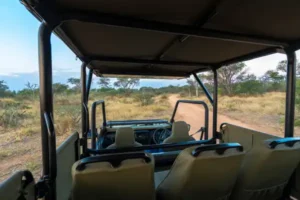
Kruger Park Day Tour
Full day with a local guide, pickup from your lodge.


0 Comments